Read the figure in context
Use RTP as a description of the game model, not as a target your personal balance is supposed to reach.
A Plinko strategy is useful only when it helps you make clear choices before the ball drops. That starts with understanding the plinko game in front of you, including its paytable, risk options and stake controls. A strategy can organise those decisions, but it cannot choose the next landing pocket for you.
That distinction matters if you searched for the best Plinko strategy or wondered how to win at Plinko. The useful answer is not a secret pattern. It is understanding the game well enough to know which decisions are yours and which outcomes remain uncertain.
The short answer is that no method can make the next Plinko result certain. A ball may land on a high multiplier, a low one or somewhere in between, and a strategy does not turn that uncertainty into a scheduled outcome. If a system claims it can tell you where the next ball must finish, that claim goes beyond what the game controls allow.
What a strategy can do is make your own decisions more consistent. You can decide the stake before the session starts, choose a risk profile after reading the paytable and avoid changing several settings every time the balance moves. That does not create an edge over the game, but it does make the session easier to understand.
This is why the best Plinko strategy is better thought of as a decision framework, not a prediction formula. It helps you read the game before you act. If you keep that distinction clear, you are less likely to mistake a short winning streak for proof that a system has started working.
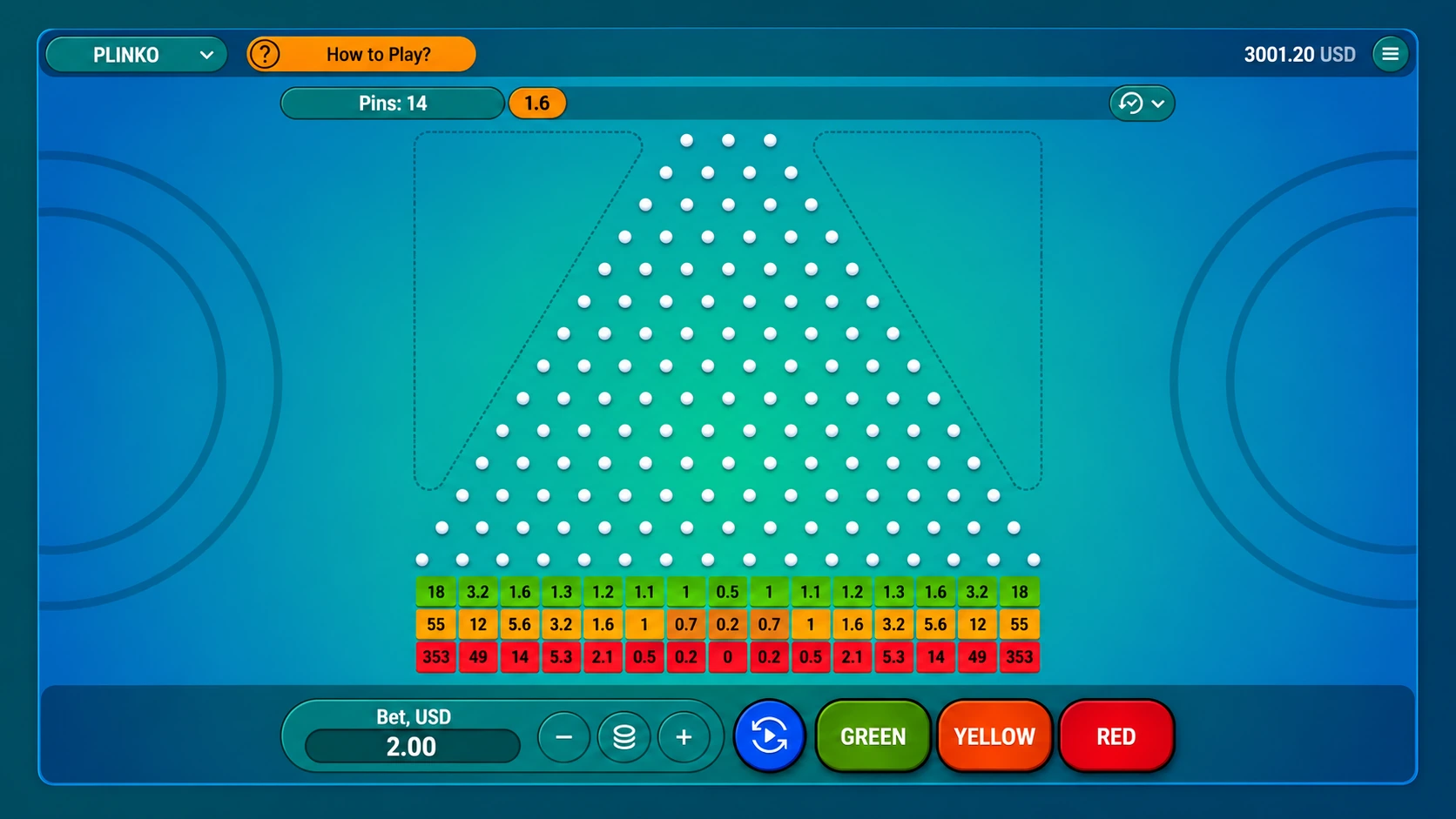
Before a round begins, you can control the bet and the settings the game makes available. After the drop starts, the result is no longer something you steer by changing your mind. A useful strategy therefore focuses on the decisions that happen before the ball moves.
On practice, this means deciding the setup first and leaving it alone long enough to understand it. Constant changes make it difficult to tell whether you are following a plan or simply reacting to the last result.
A system is pointless if you have not checked the game information first. The RTP, multiplier table and risk options belong to the specific version in front of you, and another Plinko title may not use the same values. Read those details before you think about stake size or session length.
After that, keep the plan simple. The fewer assumptions you make, the easier it is to see what the game is actually showing you.
A single positive round and a profitable long-term result are not the same thing. Keeping those ideas separate makes the rest of the strategy easier to judge.
A high multiplier can make one round look convincing. The problem is that a single result tells you almost nothing about whether the decision that came before it was good or bad. Random games can produce attractive outcomes even when no useful pattern exists.
If you are testing an approach, do not judge it by the most memorable drop. Look at the rules and the total amount staked instead. That gives you a more grounded picture than one result on the screen.
The biggest number on a Plinko board is easy to notice because it is designed to stand out visually. It is only one part of the payout structure, though. Smaller multipliers across the rest of the table matter just as much when you are trying to understand the game.
This is especially important if you searched how to win Plinko and are tempted to focus only on the edges. Read the entire table first. The full distribution tells you more than the headline value.
Recent drops are useful as a record of what already happened, but they do not turn into instructions for the next round. A run of low results does not create a requirement for the next ball to land on a large multiplier. In the same way, a recent win does not make the following round safer.
For anyone asking how to win at Plinko, this is the most important expectation to set early. A strategy can improve how you make decisions, but it cannot turn the result history into a reliable forecast.
Plinko RTP is a theoretical long-run return percentage stated for a particular game or configuration. It describes how the maths is designed to behave over a very large number of rounds. It does not tell you what your next ten, hundred or thousand drops must return.
That difference matters because short sessions can move far away from the theoretical percentage. You may see a result that looks much better or much worse than the RTP figure for a while. The number is useful for comparing game maths, but it is not a personal forecast.
There is also no reason to assume every Plinko title uses the same RTP. Providers can build different versions, and some games may change the available maths with particular settings. The information panel inside the exact game is the place to check rather than carrying one number from another version.
RTP is a theoretical figure over a large number of rounds. It should not be read as a guarantee for one session.
Use RTP as a description of the game model, not as a target your personal balance is supposed to reach.
Two Plinko titles can look similar while using different settings or published figures. Open the information panel each time you switch games.
A game can have a similar theoretical return while producing a very different pattern of short-term results because the payout distribution is different.
If your recent results are below the RTP, that does not mean the game now owes you a correction in the next few rounds.
The risk selector changes how the payout table is shaped in many Plinko versions. That makes it more important than a cosmetic preference. Before choosing low, medium or high, look at how the values across the board move when you change the setting.
A lower-risk profile may put more weight on less dramatic results, while a higher-risk profile can create wider swings between outcomes. The exact values depend on the game. The label alone is not enough to tell you whether a setup suits the way you want to play.
There is one useful rule here: do not confuse risk with expected return. A higher-risk mode can look more exciting because the largest numbers are bigger, but that does not automatically mean the Plinko RTP is higher. Check both pieces of information separately.
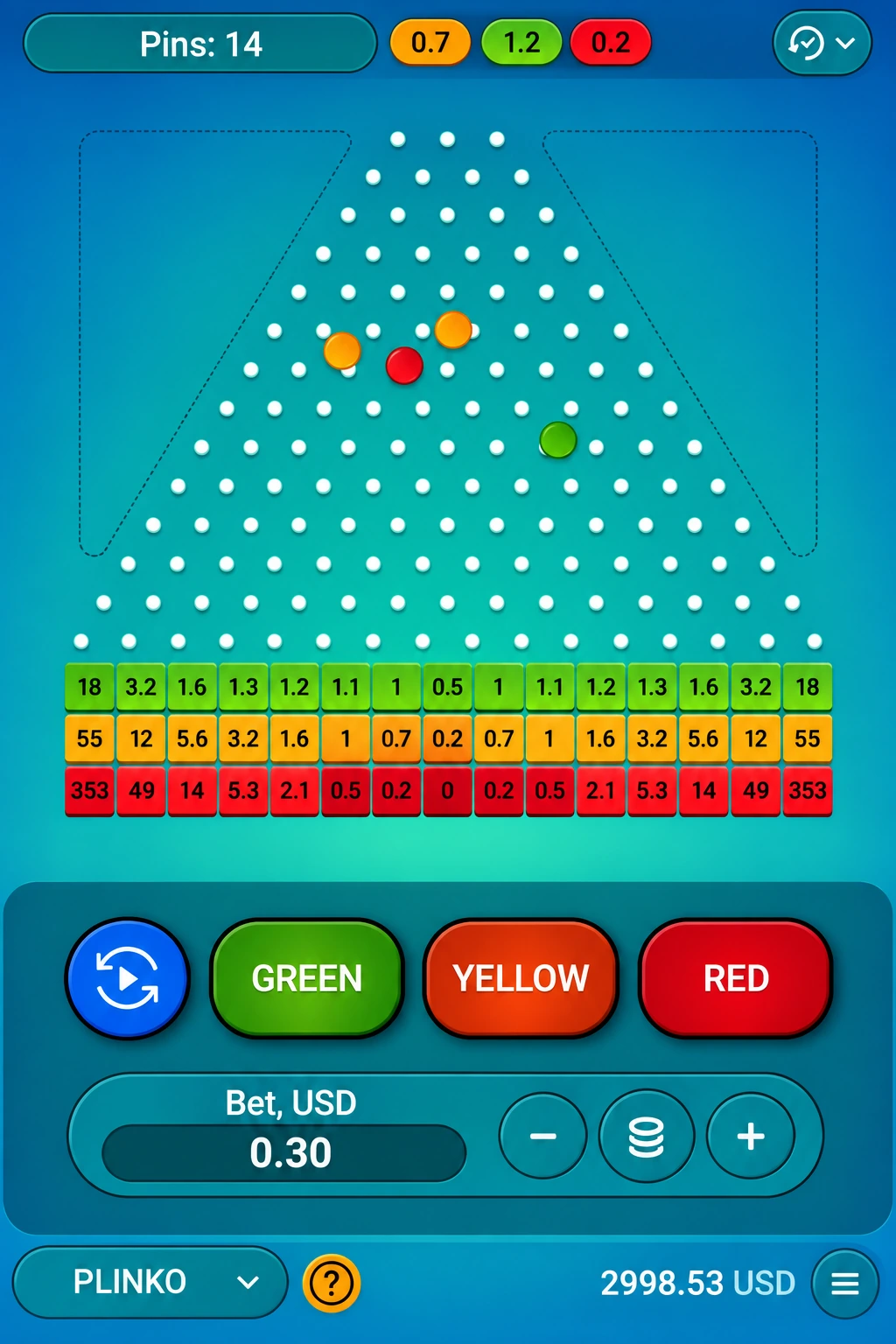
Read the middle of the payout table as carefully as the edges. The goal is to understand the distribution, not to assume the word “low” means the balance cannot fall.
Medium risk can sit between the other modes, but the actual table is still the useful reference. Check the values rather than treating the label as a recommendation.
Large outer multipliers may become more prominent. Read the smaller values at the same time so you understand the trade-off before the first round.
The stake controls how much money is attached to each round. It does not tell the ball where to land.
A small stake can feel harmless when you look at a single click. The total changes once the same amount is repeated many times. For example, C$0.50 across 100 rounds represents C$50 in total stakes before you consider the results.
This is why session planning works better in rounds than in isolated bets. Decide how many rounds fit the amount you intended to use, then choose the stake from that limit rather than the other way around.
Reducing the amount per round can give you more rounds for the same planned budget. That can be useful if your goal is to spend more time learning a setup. It does not make a particular multiplier more likely to appear.
Keeping those ideas separate prevents a common misunderstanding. A longer session is simply a different use of the same budget, not proof that the strategy has become stronger.
A losing round is finished once the result appears. Raising the next bet does not repair the previous outcome or make the next ball more likely to land on a high value. It simply puts more money into another uncertain round.
If your plan changes only because the last result was negative, stop and check what you originally intended to do. A strategy is easier to follow when the stake is chosen before emotion enters the decision.
When you test a risk setting, a stable stake makes the balance changes easier to read. If you change the amount every few drops, you add another moving part to the session. That makes the results harder to compare.
You do not need to keep one stake forever. The useful point is to avoid changing it without a reason you decided in advance.
The easiest plan is usually the one with the fewest moving parts. A Plinko strategy only makes sense once the basic game mechanics—stake, risk, rows and the payout table—are clear, because otherwise you may mistake a control change for a strategy effect. Keep the setup simple enough that you can tell what you actually changed.
Stay with one provider long enough to understand its interface, published RTP and paytable. Switching constantly makes comparison harder.
Read the long-run figure and the entire multiplier layout before focusing on the largest number on screen.
Pick the setting after reading the table, then keep it long enough to learn how that configuration is presented.
Base it on the amount and number of rounds you planned, not on whether the previous ball won or lost.
A strategy becomes difficult to follow when every result triggers a new rule. Decide in advance when you will pause and review the session, whether that is after a certain number of drops or at a time limit. That creates a natural checkpoint without turning each round into a reason to change direction.
The point is not to find a magic sample size. It is to give yourself a consistent moment to look at the total stake, the settings you used and whether you are still following the plan you started with.
A Plinko demo gives you room to test a routine without attaching real money to every decision. You can compare settings, watch how the paytable changes and see whether your planned pace is practical. Virtual results still do not prove that a strategy can predict or improve the next outcome.
After that, compare settings rather than short winning streaks. A demo can show you how low, medium and high risk look on the screen, but a favourable series of virtual results does not prove that one mode will produce the same outcome later. Use practice mode to understand the interface, not to certify a winning system.
There is another benefit: you can notice whether the pace itself changes your decisions. If you start clicking faster or changing the stake after a few losses even with virtual credits, that is useful information about the routine. The dedicated Plinko demo guide explains the practice mode in more detail.
Short answers to the questions behind most strategy searches.
There is no strategy that can guarantee the next result. A practical best Plinko strategy is to understand the RTP and paytable, choose a risk profile deliberately, plan the stake before play and avoid changing the plan only because of the last drop.
There is no method that guarantees a win. If you are asking how to win at Plinko, the useful focus is on the choices you can control: stake, risk setting, game version and pace. The landing result itself remains uncertain.
Yes, if by Plinko strategy you mean a consistent way to read the game and manage your own decisions. No strategy can force a particular multiplier, but a clear plan can stop you from reacting randomly to every result.
Plinko RTP is the theoretical long-run return percentage for a particular game or setup. It is useful for understanding the game model, but it is not a promise that your personal session will return that percentage.
No approach can guarantee consistent profit. The part you can make consistent is your process: read the rules, choose the settings before you start and avoid treating a short run of results as proof that a system has found an edge.
The simplest order is usually the clearest: check the RTP, read the risk profile, choose the stake and decide how many rounds or how much time you intend to use. Those are real choices you can make before the game starts.
After the ball drops, let the result be a result rather than a message about what must happen next. If you want to review the basic mechanics first, the how to play Plinko guide covers the rules separately. If you want to practise without real money, use the demo guide.